
16 September 2010


14 September 2010
11 September 2010
The World is a Ghetto
Hidden behind the zinc fences of your favorite tourist destinations...


Manila, Philippines


Soweto, South Africa


Dharavi slum, Mumbai
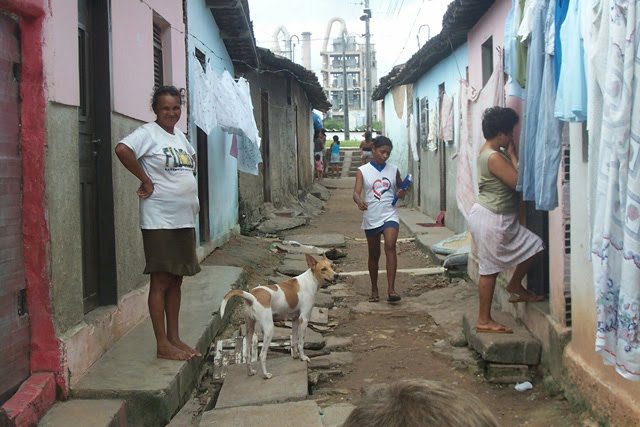

São Paulo, Brazil

Caracas, Venezuela

Lima, Peru


 |
| Jakarta, Indonesia |
01 September 2010
Unda Mi Sleng Teng
The most recycled riddim in reggae history...
If you listen to reggae, you've had to hear the sleng teng riddim sampled by artists young and old... Had a good time with these mixes this morning :)
If you listen to reggae, you've had to hear the sleng teng riddim sampled by artists young and old... Had a good time with these mixes this morning :)
22 August 2010
21 August 2010
16 August 2010
Rockers...It's Dangerous



14 August 2010
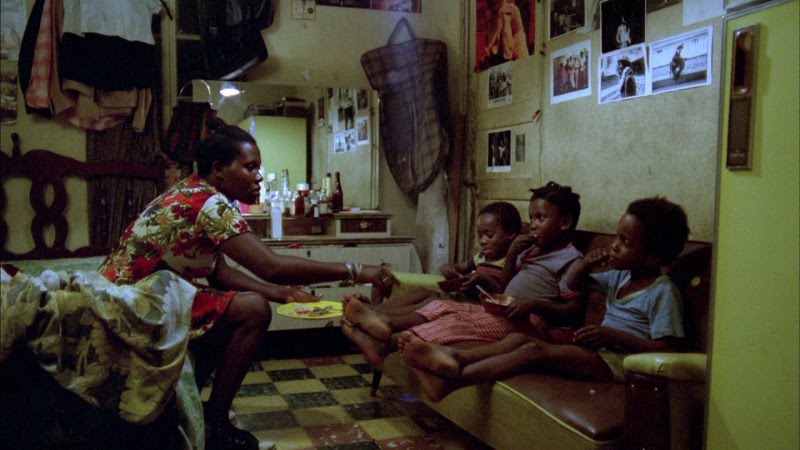
Life We Living...
Many people have their objections of Vybz Kartel and his oftentimes provocative music and lifestyle, but 'Life We Living' is nonetheless a peek into the reality of many Jamaicans. The message in this song, of course, crosses all borders...
12 August 2010
AfricanMoussou

Check out this Blog by my dear friend Nana.
It is a wonderful page full of images of beautiful African women worldwide. Enjoy!
10 August 2010
09 August 2010
Olive Oil and Aloe Vera Jelly
OmegaD's Picks
Two essential ingredients that are easy to use and extremely beneficial to the entire body. Combining the two also creates a light moisturizer for everyday use.

Extra Virgin Organic Olive Oil
Benefits/Uses:
- Lowers bad cholesterol and high blood pressure
- Helps to heal scars, stretch marks, and dry skin
- Can be used for everyday cooking and body moisturizing
 Aloe Vera Jelly
Two essential ingredients that are easy to use and extremely beneficial to the entire body. Combining the two also creates a light moisturizer for everyday use.

Extra Virgin Organic Olive Oil
Benefits/Uses:
- Lowers bad cholesterol and high blood pressure
- Helps to heal scars, stretch marks, and dry skin
- Can be used for everyday cooking and body moisturizing
 Aloe Vera Jelly
Benefits/Uses:
-Regenerates skin cells damaged by scarring
-Helps to heal cuts, sores, insect bites, and blisters
-Assists in treating dandruff, psoriasis, and hair loss
-Soothes sprains, strains, muscle pains and arthritic pain.
-Relieves stomach ailments, kidney disorders, and headaches
14 July 2010
K'NAAN- T.I.A
from the Troubadour Album
K'naan definitely stands alone as an artist dedicated to storytelling. A true talent, his music gives a fresh look into the the beautiful struggle of African people on the continent [and elsewhere].
K'naan definitely stands alone as an artist dedicated to storytelling. A true talent, his music gives a fresh look into the the beautiful struggle of African people on the continent [and elsewhere].
19 May 2010
African Women of Revolution
 Ghana
Ghana Yaa Asantewaa was an Ashanti queen who led resistance to the colonization of Ghana by the British. She succeeded in the short run, but the Ashanti were heavily outgunned. One of her most famous quotes states: "If you the men of Ashanti will not go forward, then we will. We the women will. I shall call upon you my fellow women. We will fight the white men. We will fight until the last of us falls in the battlefield."
East Africa
[borrowed from "Shamanic priestesses of East Africa"]
The legend of Queen Nyabingi [spelled several ways] began with an amazon queen named Kitami, who possessed a sacred drum. Later generations revered her as a powerful ancestor and she spoke through priestesses called Bagirwa. Most of them were were traditional healers, chosen by Nyabingi as her prophets...
Muhumusa appears in the early 1900s as a widowed Rwandan queen mother who fled with the heir to the throne into Ndorwa, in what is now SW Uganda. She was a chief who refused to acknowledge the usurper mwame Musinga, who was allied with the German colonials. In 1911 Muhumusa proclaimed “she would drive out the Europeans” and “that the bullets of the Wazungu would turn to water against her.” She roused a military resistance which was stamped out within months, and she spent the rest of her life under detention, first by the Germans and then at the behest of the British (1912-1945).
Muhumusa became the first in a line of rebel priestesses fighting colonial domination in the name of Nyabingi. The British passed their 1912 Witchcraft Act in direct response to the political effectiveness of this spiritually-based resistance movement.
Note: The Nyabingi movement of the 1930s inspired the Rastafarians in Jamaica. They adopted Queen Nyabingi as a spirit of liberation, and The Order of Nyabingi became an important touchstone in Rasta culture. Drumming and chanting Nyabingi took on the meaning of overcoming oppression and destroying those who committed injustice.
 Jamaica
 Nanny of the Maroons was born in Ghana, and folk history says that she came to Jamaica with the express purpose of becoming a high priestess and leader of her people, never having been a slave. She was an obeah-woman who led the eastern Maroons based in Moreton, and forged an alliance with another group led by Cudjoe.
Nigeria
"The War of the Women"
 The Aba rebellion in southeastern Nigeria grew out of a traditional female rite of the Igbo. People were outraged at the colonial government's plan to tax women, "the trees that bear fruit." In protest, Ibo women bound their heads with ferns, painted their faces with ash, put on loincloths and carried sacred sticks with palm frond wreaths.
 The Ibo women's councils mobilized demonstrations in three provinces, turning out over 2,000,000 protesters...women protestors burned down the hated British "Native Courts" and cut telegraph wires, throwing officials into panic. The colonials fired on the female protesters, killing more than fifty and wounding more. Marches continued sporadically into 1930. These mass actions became known as the Aba Rebellion of 1929, or The War of the Women. It was one of the most significant anti-colonial revolts in Africa of that day. [from "African Warrior Women"]
------------------------------------------------------------------------------------------
Today, as we celebrate the birthday of one of the most profound African intellectuals in history, Malcolm X, we must always remember to think about the importance of family and women in the Black community. Now, it is my argument that the true revolutionaries are murdered because they know and respect the importance of the African woman in society. I am not claiming that every man murdered in the name of his cause respected women, but one must find it in their soul to recognize those men who truly believed in the liberation of African people worldwide and knew the importance of women in their societies. You will find that many movements, put too much emphasis on the man as head and the women taking on secretarial roles, but in all reality, if you are to have a drastic change in the function of society, you must acknowledge the power that the African woman has and let her light shine on African progress.
Quotes by Great Men About the Importance of Women

“I can hear the roar of women's silence.” [Thomas Sankara- Burkina Faso]

"… there were even matriarchal societies where women were the most important element. On the Bijagos Islands they had queens. They were not queens because they were the daughters of kings. They had queens succeeding queens. The religious leaders were women too..." [Amilcar Cabral- Guinea Bissau]
16 May 2010
Summer Readings: Women of the Black Diaspora
These few books tackle the evolution of Black [African descended] women in societies worldwide. Hopefully, through these stories, fiction and nonfiction, there can be a better understanding of common trends and struggles of Black people throughout the world.
I compiled this small list of books from my own personal collection and from the suggestions of Nana B.
 Kehinde by Buchi Emecheta [Nigeria]
Wench by Dolen Perkins-Valdez [of Tennessee, USA]  The story of young Shona girl living in a small village who struggles to break free from poverty and acquire an education, in a world where she is expected to do otherwise.
I compiled this small list of books from my own personal collection and from the suggestions of Nana B.
 Kehinde by Buchi Emecheta [Nigeria]
The story of a Nigerian family living in London who decide to move back to Nigeria after living abroad for almost 16 years. Kehinde, the main character, soon finds herself in a state of desperation and heartbreak due to the events following the move, and decides to follow her own path through the guidance of her chi.

Pawar is a activist who writes about her own experiences with caste discrimination in India and how she discovered the power in writing about the everyday struggles of the Dalit [or Untouchables].

The book is a personal account of an Indigenous Australian family's experiences as members of the "Stolen Generation", which was caused by the forced removal of mixed-caste children from their families during the early 20th century. It tells the story of three Aboriginal girls: Molly (the author's mother), Daisy (Molly's sister) and their cousin Gracie, who escape from a government settlement in 1931 and trek over 1,600 kilometres home by following the rabbit-proof fence, a massive pest-exclusion fence which crossed Western Australia from north to south.
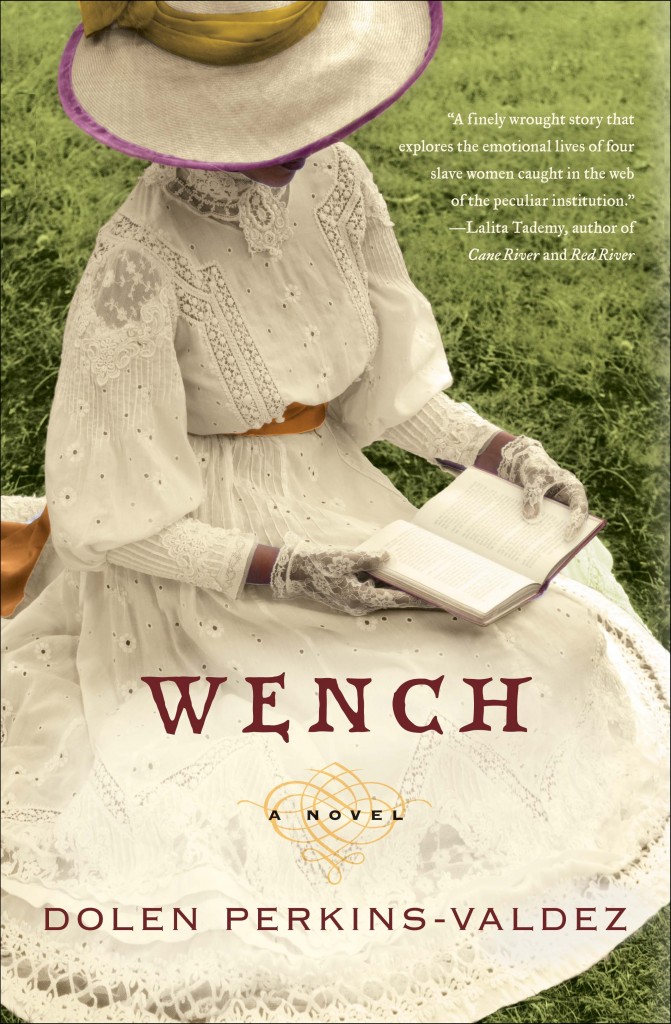
Wench by Dolen Perkins-Valdez [of Tennessee, USA]
The story takes place in an 1853 Ohio Tawawa Springs vacation resort [located at present day Wilberforce University] which serves as a destination for a group of the slave-mistresses and their masters. The novel delves into the relationships between the women and their masters, and each other.

 The story of young Shona girl living in a small village who struggles to break free from poverty and acquire an education, in a world where she is expected to do otherwise.
A young girl struggles with her identity in the racist mid-20th century South, while coping with the constant abuse from her "passing-for-white" mother who stops at nothing to fulfill her own selfish fantasies [mostly at the expense of her children].
05 May 2010
02 May 2010
18 April 2010
30 Years of Independence: Zimbabwe

As Zimbabwe goes into its 30th year of Independence, there is a need to acknowledge the accomplishments of Zimbabwe under the rule of Robert Mugabe, but there are so many things that the country needs to deal with before celebration. The Zimbabwe has a rich history and the people of Zimbabwe have struggled for far too long. Robert Mugabe came into power 30 years ago and many are hoping that he will give up his powers. While Mugabe has sometimes made the wrong decisions for his people, we must always remember what sacrifices he has made for Blacks in this country. Many of his actions have caused sanctions and criticism from the West, but in order to understand the state of Zimbabwe today, we must remember all of the other African leaders who do nothing for their people, yet are best friends with the West and International Aid Organizations.

READ MORE:
BBC Timeline: Zimbabwe
The Toyi-Toyi of Southern Africa
OmegaD.
17 April 2010
Mbira Dzavadzimu: "Voice of the Ancestors"
The Mbira has been used by the Shona people of Zimbabwe for thousands of years. Traditionally, the Mbira is used to facilitate communication with the ancestors. There are many names for the Mbira because it is used throughout African music but Mbira music is most popular in Zimbabwe.


I always enjoy finding the younger generation of African musicians utilizing the musical creations of their ancestors. I love this video by Tinashé, a rising talent originally from Zimbabwe, who gives us a beautiful love story with the help of the Mbira [a musical instrument consisting of a wooden board to which staggered metal keys have been attached].
More Info on the Mbira
Checkout Tinashé's Youtube page


I always enjoy finding the younger generation of African musicians utilizing the musical creations of their ancestors. I love this video by Tinashé, a rising talent originally from Zimbabwe, who gives us a beautiful love story with the help of the Mbira [a musical instrument consisting of a wooden board to which staggered metal keys have been attached].
More Info on the Mbira
Checkout Tinashé's Youtube page
Subscribe to:
Posts (Atom)